
Most service businesses face this choice and get it backwards. They run paid ads before proving their organic funnel works, burning budget on channels that amplify broken processes. The real decision is not "which one works" but "what order they work in" and "what stage your business is at." Cold audiences and warm audiences need completely different approaches.
Here is what the data actually shows, and the correct framework for making this decision.
The fundamental difference between paid and organic
Paid ads reach cold audiences. Someone scrolling their feed sees your offer with zero prior relationship to your brand. They have not seen your work, do not know your results, and have no reason to trust you yet. The algorithm placed your ad in front of them because it matched a demographic pattern. Organic posts reach warm audiences. These are people who follow you, engaged with your content, or discovered you through research. They have context and evidence.
This distinction drives everything that follows: conversion rates, cost per lead, sales friction, and decision-making speed. Cold audiences require more persuasion. Warm audiences require less friction. The cost per lead differs by 20 to 100 times depending on which channel dominates your funnel. Understanding this gap is the foundation for any decision about where to spend your budget.
Cost comparison: the real numbers
Paid Instagram leads for service businesses cost $15 to $80 per lead. This varies by niche, targeting precision, and creative quality. Beauty and fitness tend toward the lower end. B2B services and high-ticket coaching tend toward the upper end. At $15 per lead, acquiring 300 leads costs $4,500. At $80 per lead, the same volume costs $24,000 monthly.
GOSO's organic AI lead generation system produces leads at $0.50 to $0.83 each. This is not hyperbole. Identifying people who already follow your account, engage with your content, or match your customer profile costs dramatically less than interrupting cold audiences. The same 300 leads cost $150 to $250 monthly instead of $4,500 to $24,000. This is 18 to 160 times cheaper.
The difference reflects a fundamental truth about Instagram. Warm discovery (someone finds you organically, engages, and asks) converts at higher rates with lower cost than cold interruption (ads reach strangers with no prior context). GOSO's 32,000+ clients average 300 to 500 targeted lead interactions monthly at these economics, compared to the far higher cost of paid acquisition at equivalent volume.
When paid ads actually work well
Paid ads serve three specific purposes where organic cannot grow fast enough. First, retargeting warm audiences. If you have built an email list of 5,000 past leads or subscribers, ads shown to that audience convert at 2 to 8 percent because they already understand your offer. Cost per acquisition drops dramatically because these are not cold strangers. Second, launching a new offer at speed. Organic growth takes time. If you have validated a new service through word of mouth but need customer acquisition within weeks, paid ads compress the timeline. Third, testing messaging rapidly. If you want to compare three different offer angles against audiences, paid ads give fast feedback about which resonates.
Lookalike audiences built from existing customers also perform well. These audiences are warmer than pure cold traffic, so cost per lead drops to $8 to $25, which is more defensible. In all these cases, paid ads work because they reach either warm audiences or test unproven messages quickly before investing heavily in organic content.
When paid ads fail completely
Paid ads collapse when your organic funnel does not convert. Ads amplify what you already have. If your sales page fails to move 3 percent of warm prospects to calls, paid ads will not fix that. They will only burn budget faster on a leaky funnel. Many service businesses buy ads before proving their core offer converts organically. This is backwards. Test organic first where cost per lead is minimal.
Paid ads also fail when your offer is unproven. If nobody in your network has yet bought what you are selling, cold ads to strangers will not create demand. They test the market at high cost. Prove organic first, then grow with ads. Finally, paid ads struggle when the trust gap is too large. High-ticket services, coaching at $5,000 to $25,000, and specialised trades rarely convert from cold ads. The decision requires relationship-building, case study evidence, and demonstrated expertise. A stranger on Instagram does not move from awareness to $10,000 commitment in one campaign. Organic relationship building does this. Cold ads do not.
Why organic wins for high-ticket services
Ready to see your own path to sales?
Add your Instagram and we scan your real account, free. You also get three AI agents that do the work.
The purchase decision for high-ticket services requires trust, proof, and rapport. Cold ads cannot build this in two weeks. Organic posts do. When someone discovers your account through research, sees 50 posts of your results, reads testimonials, and engages with your community before reaching out, they arrive ready to buy. The conversation moves to price and timing, not "will you actually deliver?" This is why organic-first businesses often close 40 to 60 percent of qualified leads. Cold-ad-dependent businesses often close 5 to 15 percent. The customer acquired through organic is more aligned with your offering.
The integrated approach that actually works
The highest-performing service businesses do not choose between paid and organic. They do both, in sequence. Organic AI automation builds the warm audience first. This generates 300 to 500 lead interactions per month. Among those, 10 to 25 percent convert to booked calls. From booked calls, 30 to 50 percent convert to clients, depending on sales skill and offer clarity.
Once that organic funnel produces consistent revenue and client outcomes, paid retargeting ads accelerate conversion from the warm pool. You retarget website visitors, email subscribers, and past leads with ads addressing their specific objections. Cost per acquisition stays low because the audience is warm. This layered approach keeps customer acquisition cost sustainable while growing volume. The correct sequence is critical. Prove organic conversion first. Build your warm audience to 2,000 engaged followers. Achieve consistent lead volume and conversion rates. Then add paid retargeting to accelerate. Reversing this order leaves you overspending on cold traffic while your organic foundation remains undeveloped.
The numbers that change the decision
A service business earning $1,000 to $5,000 per client cannot afford $15 to $80 cost per lead. The maths does not work. A contractor acquiring clients at $50 per lead, converting 30 percent to bookings, and earning $2,000 per job barely breaks even on customer acquisition. Organic leads at $0.50 to $0.83 each transform this. The same 300 leads now costs $150 to $250 instead of $4,500 to $24,000.
This is why organic-first businesses compound faster. Lower acquisition cost allows reinvestment into content, team, and delivery. The business grows without margin collapse. GOSO clients using this approach average 300 to 500 organic leads per month. At 30 percent call-to-client conversion, that is 90 to 150 new clients monthly. At $1,000 per client, this represents $90,000 to $150,000 monthly revenue from Instagram alone. The same volume through paid ads at $15 to $80 per lead would cost $4,500 to $24,000 to acquire, making the unit economics dramatically different (3 to 6 times lower acquisition cost with organic).
Frequently asked questions
Should I run paid ads if I have no organic following yet?
No. Start with organic content and AI-assisted outreach. You need a content foundation before paid ads become worthwhile. When someone clicks your ad, they land on your profile. If you have three posts, no testimonials, and no visible results, conversion rates collapse dramatically. Spend your first two to three months building an organic presence with results-oriented content. Then test paid ads as a retargeting channel to your small warm audience. The ad spend protects itself better when prospects already know who you are. This approach saves money while you prove your offer works.
What is the minimum follower count before paid ads make sense?
Follower count matters far less than engagement rate and audience alignment. A 3,000-follower account with 5 percent engagement (comments, shares, story replies) outperforms a 50,000-follower account with 0.5 percent engagement on paid ads. The audience quality, not raw size, determines conversion. Most service businesses see paid ads become viable around 2,000 to 5,000 followers with good engagement. Below that, organic-only tends to produce better returns. Focus on engaged, niche-specific followers before adding paid. Quality always beats quantity in conversion.
Can I run both paid and organic simultaneously from day one?
You can, but it wastes money. Your organic funnel will not be ready to absorb the traffic, and conversion rates from cold ads will be poor. If you have budget to split, invest 80 percent in organic content and AI systems, 20 percent in small retargeting ad sets to email subscribers. Never run cold acquisition ads without a proven organic funnel first. The cost per lead will be too high to sustain profitably. Test organic free or cheap first, then layer paid on top of what works.
How long does it take for organic to produce 300+ leads per month?
Three to six months, depending on niche competition, content frequency, and targeting quality. Month one typically produces 100 to 200 interactions as the AI system learns your audience. Month two brings 200 to 350. Month three reaches 300 to 500 as targeting data matures and the algorithm distributes your posts to increasingly relevant audiences. GOSO clients who post three times per week see faster growth than those posting weekly. Consistency compounds. You can accelerate this by using tight audience targeting and content that demonstrates clear results.
If my organic conversion rate is low, should I increase paid spending instead?
No. Fix the organic conversion first. If only 5 percent of organic leads convert to calls, the problem is not reach, it is sales process. Paid ads will not change that. If your offer is unproven, ads will not add credibility. If your email sequence fails to nurture, ads will not fix follow-up. Diagnose the bottleneck: is it reach, lead quality, sales skill, or offer clarity? Organic leads are cheaper to test and iterate with. Use them to prove your model. Then grow with ads once you know what works.
Do it on your own account, not a template
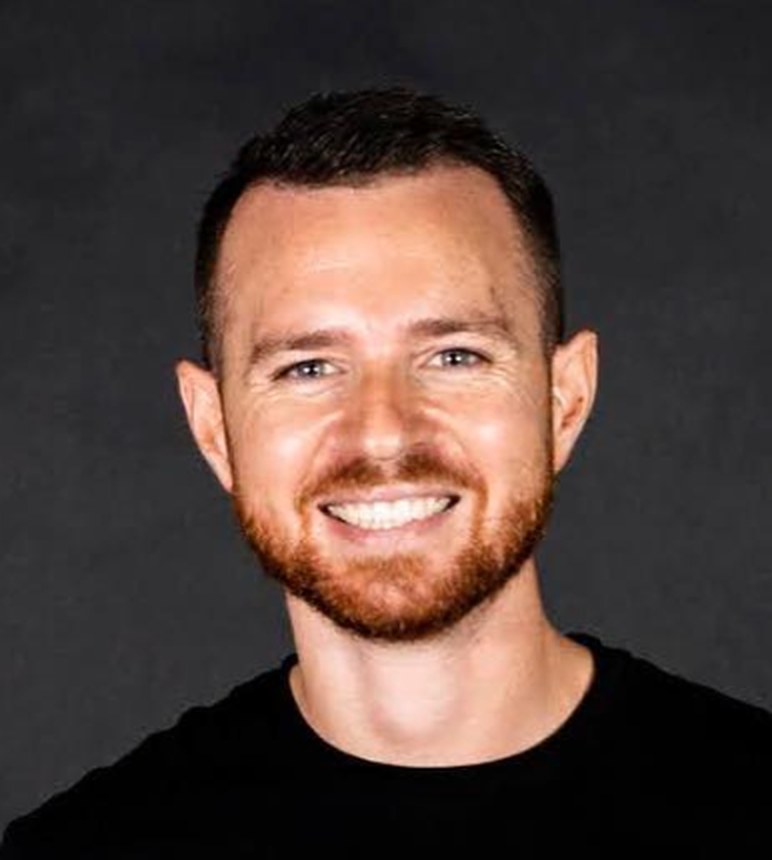
Chris Rowan, Founder and CEO, GOSO.io
Everything above is the method. Add your Instagram and we apply it to your real account, free, plus three AI agents that do the work.